
July 10, 2026 · 5 min read · Glacier Heating & Air
When the forecast parks in the upper 90s, every air conditioner in San Antonio runs flat-out for days with no recovery time. That's when tired systems quit — always on the worst possible afternoon. Here's the checklist we'd run in our own homes before the next stretch of heat, in order of bang-for-effort.
The free five (do these this weekend)
- Swap the air filter — in summer, treat 1-inch filters as a monthly item, not quarterly. Can't see light through it? It's done.
- Set the thermostat at 78° and leave it alone. Big up-and-down swings cost more than holding steady, and 'crank it to 65 to cool faster' is a myth — it cools at the same speed, just longer.
- Switch the fan from ON to AUTO. ON runs the blower 24/7 and pulls humidity back into the house; AUTO runs only while cooling — drier air, lower bill.
- Close blinds on west-facing windows after lunch. Afternoon sun is half the battle in Texas.
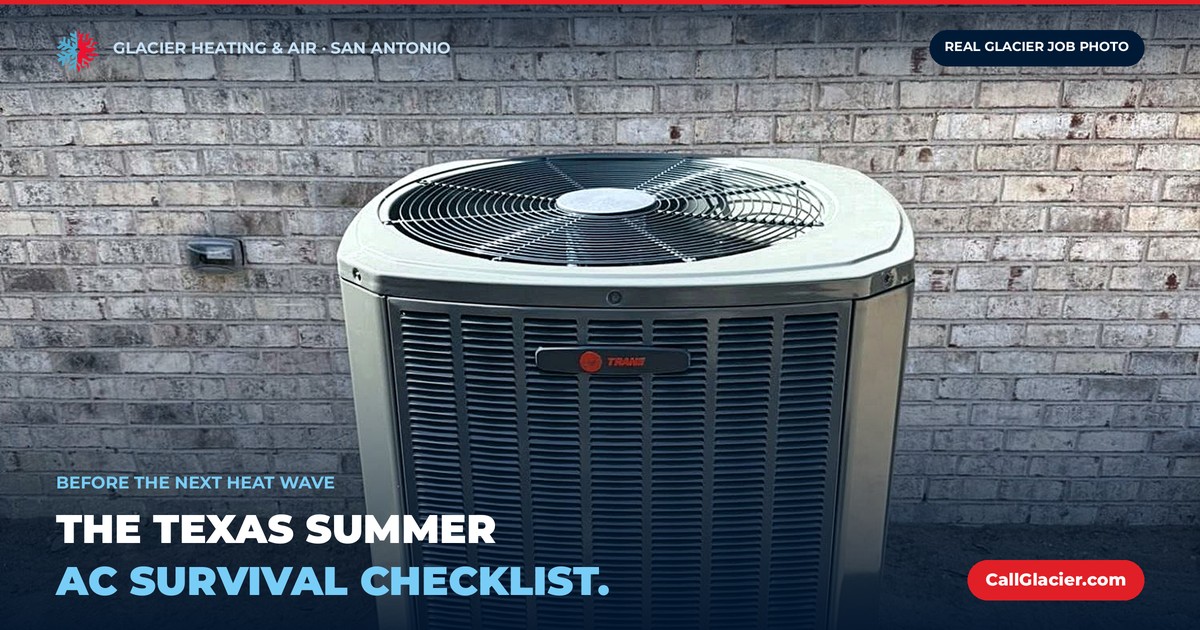
- Clear two feet around the outdoor unit — trim shrubs, blow away clippings after mowing, never stack anything on top.
The fifteen-minute jobs
- Rinse the outdoor coil: power off at the disconnect, garden hose on gentle, top to bottom. Never a pressure washer — the fins bend easily.
- Pour a cup of white vinegar down the condensate drain line. Clogged drains are one of the most common summer shutdowns, and this two-minute habit prevents most of them.
- Check supply vents room by room — open them all, even in unused rooms. Closing vents doesn't save money; it builds pressure and strains the blower.
- Feel the two copper lines at the outdoor unit (carefully): the larger one should feel cold and sweat slightly. Ice anywhere = shut the system off and make a call.
- Test the system on a mild morning, not the first 100° afternoon. If it struggles to hold temperature when it's 85°, it will lose the fight at 98° — and you want that answer while repair schedules are still open.
When to stop DIY-ing and call
Warm air from the vents, ice on the lines, breakers that keep tripping, a system that runs all day without holding temperature, or an outdoor unit that hums but won't start — those are technician territory. They're also exactly the failures that get worse (and pricier) when pushed through a heat wave.
Whoever you call — us or anyone else — get the price in writing before work starts. At Glacier that's not a promise, it's the process: free exact-price estimates, straight answers, 24/7 across greater San Antonio.