
July 10, 2026 · 6 min read · Glacier Heating & Air
It's one of the most common calls we get all summer: the system never stops running, the air from the vents feels weak or barely cool, and the house sits at 78° while the thermostat begs for 72°. The good news — in San Antonio, this problem usually comes down to one of six causes, and two of them you can check yourself before anyone rolls a truck.
1. A clogged air filter (check this first — it's free)
A 1-inch filter in a Texas summer can load up in 30–45 days, not the 90 the box promises. When the filter chokes, airflow across the indoor coil drops, the coil can ice over, and the system runs endlessly while moving almost no cold air.
Pull the filter and hold it up to a light. If you can't see light through it, swap it and give the system a few hours. This single check resolves a surprising share of 'not cooling' calls — and it costs a few dollars.
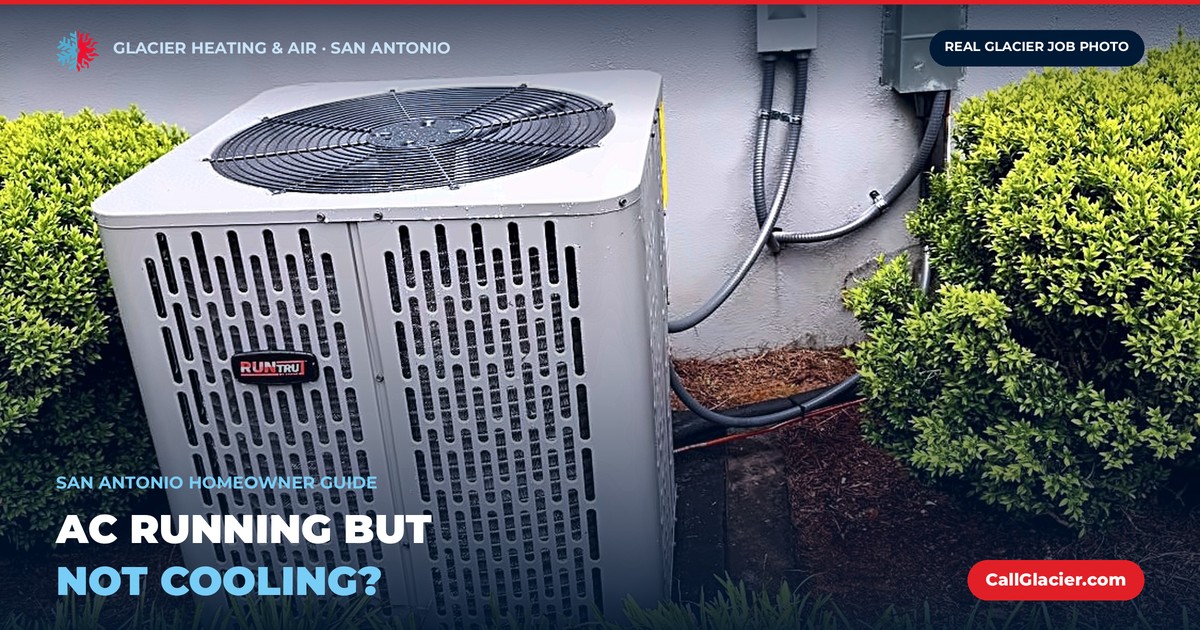
2. A dirty outdoor coil
Your outdoor unit has to dump the heat it pulls from your house into 95°+ air. If the coil is coated in dust, pollen, and grass clippings, it can't shed heat, and cooling capacity falls off a cliff.
The fix is a gentle rinse: kill the power at the outdoor disconnect, then hose the coil top to bottom with a garden hose — never a pressure washer, the fins bend easily. Keep two feet of clearance around the unit while you're at it.
3. Low refrigerant (this one needs a pro)
Refrigerant doesn't get 'used up' — if it's low, it leaked. Telltale signs: ice on the copper lines, a hissing sound, air that's cool-ish but never cold, and a system that runs constantly on hot afternoons.
Topping it off without fixing the leak is renting a solution. A proper repair finds the leak, fixes it, and weighs in the correct charge. If your system uses discontinued R-22 refrigerant, a leak is usually the moment to talk replacement math instead.
4. A weak or failed capacitor
The capacitor is a small, cheap part that gives your compressor and fan motors their starting kick. In our heat, capacitors are one of the most common summer failures. A weak one can leave the outdoor fan running while the compressor never truly engages — so the system 'runs' but nothing gets cold.
This is a fast, inexpensive fix for a technician, and one of the best-value repairs in the trade.
5. Leaky or crushed ductwork
In many San Antonio homes the ducts run through a 130°+ attic. If joints are unsealed or a flex duct is crushed, you can lose a big share of your cold air into the attic before it ever reaches a bedroom. The classic symptom: one or two rooms stay hot while the rest of the house is fine.
Duct sealing isn't glamorous, but it's some of the highest-return work we do — cold air belongs in your rooms, not your attic.
6. A system that's simply out of capacity
If your AC is 12–15+ years old, cools fine in May but can't hold temperature in August, and your electric bill keeps climbing, the system may just be past its prime. Compression weakens with age, and every summer asks more of it.
The honest test is math, not sales pressure: if a repair costs more than about a third of a new system's price on a unit past 12 years, replacement usually wins — especially with today's high-efficiency units cutting cooling costs meaningfully.
What to do right now
Check the filter, rinse the coil, and give it a few hours. If the house still won't cool, it's time for a diagnosis — and it shouldn't cost you a mystery invoice to find out what's wrong.
At Glacier, the price goes in writing before a single tool comes out, and it doesn't move. Free exact-price estimates, straight answers, and 24/7 availability across greater San Antonio.